

Welcome everyone to the fifth edition of El Boletín - the weekly newsletter with curated reading, listening, culture and community for Spanish learners. And community is the name of the game again this week, as we welcome three guest contributors to share their love of all things from the mundo hispanohablante.
In our curated reading section, Inspired by Mexico share their recipe for traditional Mexican hot chocolate, which differs from its English namesake and uses a traditional wooden whisk in its preparation.
In our listening section, we enjoy a Spanish YouTube channel which explores the English Premier League for Spanish-speaking audiences - and has a cool little link with a non-league club in the UK.
Meanwhile in our curated culture section, we’re absolutely thrilled to welcome Miguel Balsa Campos from History of Spain to share his love of the medieval city of Toledo - it’s really worth a day visit from Madrid if you’re ever in the Spanish capital.
And last but certainly not least, we welcome children’s author and poet Charlie Marrez to share his experiences learning English as a Spanish speaker. You’ll find yourself nodding along with the struggles he identifies, which are common to all of us language learners.
If their contributions have inspired you to get involved, and share that interesting article, your personal experiences learning Spanish, or that insightful cultural snippet with the El Boletín community - why not reach out to us? The slots are filling up fast, but we’d be delighted to find you a place in an upcoming edition.
For now though, let’s get stuck in!
Curated Reading: El tradicional chocolate caliente mexicano, Inspired by Mexico
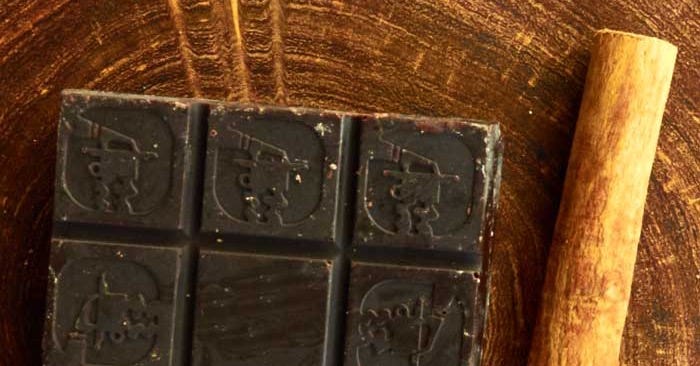
For our curated reading choice this week, we’re delighted to welcome our friends from Inspired by Mexico to share their traditional Mexican hot chocolate with us. We’ll leave it to them to introduce their recipe (in Spanish!) below - but if you’d like to read the English version of their article, you can check it out on their site. And if you do have a go at making it, please do let us know - we’d love to see the photos!
For language learners, there’s also some lovely culinary vocabulary in the below - as always, our free glossary is here to help.

Cuando el clima se pone fresco, no hay mejor bebida para calentarse que el tradicional chocolate caliente mexicano, batido a mano con un molinillo de madera.
El chocolate caliente en México es menos dulce que el chocolate caliente servido en los Estados Unidos u otros países. Tiene una textura ligeramente granulosa y rústica, esto hace que la sensación al beberlo no sea del todo una bebida suave al beber pues sentirás en tu boca su textura rústica que es una parte integral de la bebida.
El chocolate mexicano se vende en barras llamadas tablillas (tabletas) y está endulzado con azúcar y sazonado con canela. El mejor chocolate proviene del estado de Oaxaca, que es el que usamos para esta receta.
Los molinillos son la forma tradicional de batir el chocolate caliente, piensa en el molinillo como un batidor de madera. Tener un molinillo en tu cocina hará que tengas una hermoso utensilio si no también lucirá hermoso.

Preparación:
Para hacer una taza de chocolate caliente, lleva aproximadamente 8 onzas de agua o leche a punto de ebullición. Agrega 2 o 3 cuadritos de chocolate al líquido y deja que el chocolate se suavice durante un minuto más o menos.
Luego, coloca el mango del molinillo entre tus palmas y gíralo rápidamente hacia adelante y hacia atrás en el líquido para mezclar el chocolate. Después, airea la bebida para que quede espumosa y suave. Para obtener el chocolate caliente en su punto, se necesita un poco de tiempo y esfuerzo, pero bien vale la pena.
Después de batir con el molinillo por un tiempo, el chocolate empieza a adquirir la textura cremosa y espumosa que se desea. Cuanto más giras el molinillo, más ligera y espumosa se vuelve la bebida.
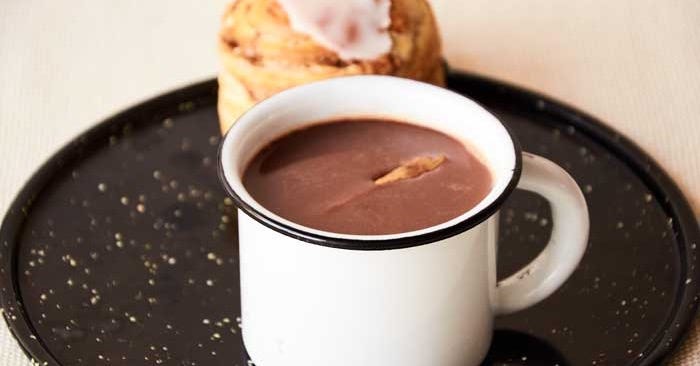
¡Disfrutalo! Servir caliente y si gustas puedes decorarlo con un trozo de palo de canela.
Curated Listening: La media inglesa
Of course, you don’t need us to tell you that football, or soccer for our US readers, is kind of a big thing in the Spanish-speaking world. In our first edition of El Boletín (gosh, that seems like a long time ago!), we highlighted Spanish YouTuber Rafael Escrig, who travels around Spain and Europe, bringing his fans human stories from the lesser-known corners of the beautiful game. If you’re a recent subscriber and haven’t yet checked out Rafa’s video watching football in the Arctic Circle, we really encourage you to do so. Our glossary is there to guide you, too.
But our curated listening pick this week is La media inglesa - a Spanish-language YouTube channel and media outlet devoted exclusively to English football. Founded in 2011, they’ve built a following of hundreds of thousands of subscribers with their dual focus on deep-dive insights for committed fans of the English Premier League, alongside more relaxed, entertainment style content to appeal to more causal viewers.
And perhaps the coolest thing? In February 2025 they began a partnership with English non-league club Harborough Town - streaming their matches to Spanish-speaking audiences across Spain and Latin America. For La media inglesa, this partnership allows them to get involved in an English club project rather than merely commenting on it - while the club in turn benefits from reaching a global, Spanish-speaking fan base.
This week, we particularly enjoyed La media inglesa’s deep dive into the falling number of British-born players in the English Premier League (from 56% in 2000 to 34% in 2025). They discuss what this means for both the league’s identity and international commercial success.
Curated Culture: A visit to Toledo with Miguel Balsa Campos, History of Spain
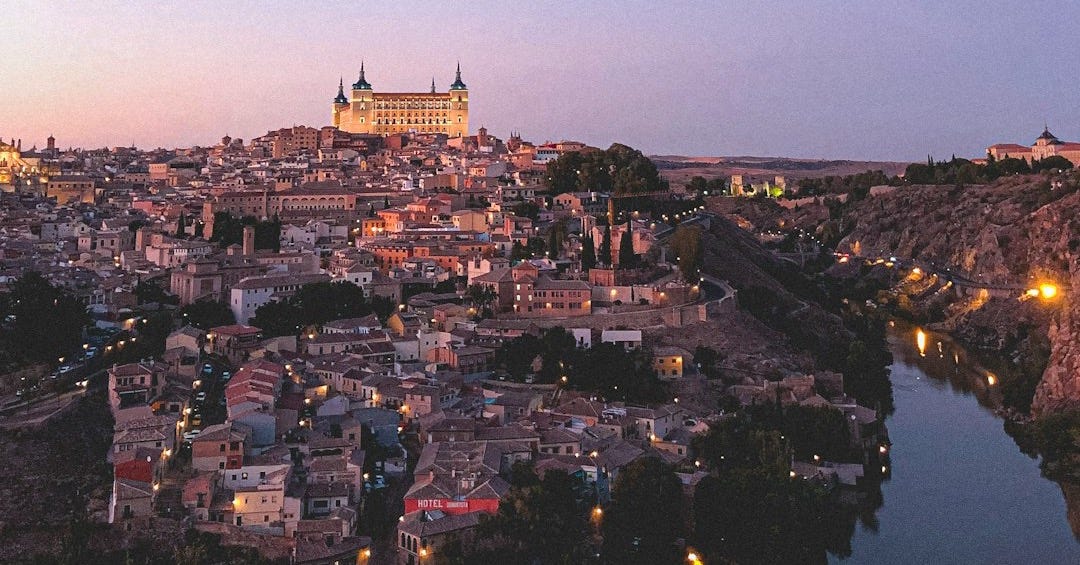
A few years ago we had the pleasure of visiting the medieval city of Toledo, on a day trip by the high-speed train from Madrid. And since then, we haven’t stopped encouraging other people to go. Arriving into the town at the train station located at the foot of an imposing hill, the walk up to the centre is steep, but it’s totally worth the hike once you arrive. You’ll be greeted by incredible architecture, history, food, and of course, a warm welcome.
But don't just take our word for it! We’re delighted to welcome Miguel Balsa Campos, writer of the History of Spain and Flavours of Spain newsletters, to share with us why he loves Toledo just as much as we do. And if you want more on Toledo, he’s just started a deep dive on his Substack.
There is a city in Spain that often goes unnoticed, but should be a main destination for anyone interested in Spanish history. I’m talking about Toledo. Located approximately 70km (43 miles) south of Madrid, Toledo is one of the most historically important —if not the most— places in Spain. It has held a pivotal role in Spain’s politics for thousands of years, being already a main settlement before Roman times. It later became a key city for the Romans, the capital of the Visigoths, an important city for the Muslims, and the imperial city and capital city of the Spanish Empire.
Toledo was the place where many important historic events either took place, or were decided and discussed. Furthermore, its history perfectly resembles that of Spain, making Toledo a great place to visit and revive each layer of the history of Spain. It held Muslims, Jews and Christians simultaneously within its walls for a long time, earning Toledo the nickname of “City of the Three Cultures”. Of course, this left a great amount of heritage and architecture preserved to this day that evidences a rich past and creates a fairytale-like environment in which to get lost.
Visiting Toledo is like looking through a window to the past of Spain. The fact the capital city status was shifted to Madrid allowed Toledo to not be destroyed making space for the modern requirements of a big city. So this beautiful former capital of an empire remained untouched, almost like in a time capsule. Crossing its centuries-old bridges, gates and walls is a great way to get lost in time and history, and forget the modern hectic world that never stops. Whether for the history or simply for the vibes, you need to visit Toledo, at least once in your life.
Curated Community: Charlie Marrez, El taller de las palabras

Something a little different in our curated community section this week. We’re pleased to invite Charlie Marrez, poet and children’s author, to share his reflections on learning English as a native Spanish speaker. Through his experiences, we see that the difficulties, anxieties and joys of learning are language are universal - regardless of your mother tongue or the language you’re learning.
We’re delighted to have Charlie as a member of our community - and if you want to practice your Spanish even further, the daily haikus on his site, El taller de las palabras, are absolutely worth subscribing to. Over to you, Charlie!
1. When and why did you start learning English?
In Spain, we start learning English from a very young age. In my case, I began when I was six. At school we had an English class, but it wasn’t many hours a week, and I don’t think it was the best way to learn the language.
It seems that teaching methods are improving now, but for many years learning English mainly meant memorising vocabulary, irregular verbs and expressions. We weren’t really prepared for “the real world”, and I used to panic whenever I had to speak in English.
2. What advice would you give to other students learning a language?
Although having a good grasp of grammar and vocabulary is important, the best way to learn a language is to immerse yourself in it. Listen to the radio in that language, watch films and series in their original version, and, if possible, surround yourself with people who speak it. It’s during those everyday, casual conversations that you actually learn the most.
3. What’s your proudest or most memorable moment you’d had using English?
At work. I have a job in cybersecurity for a multinational company, and the moment I’ve felt proudest was when I realised I was speaking English so comfortably that I’d stopped thinking in my mother tongue. I just understood everything as if it were Spanish. I even made a joke during that conversation, and that’s when I thought: “I can have the same personality in English as I do in Spanish.” 🙂
4. What have you found most difficult, and how do you deal with that?
For me, the hardest thing is having more informal conversations, especially when people use expressions I don’t yet know. But it’s something I’m getting better at with time and experience. As I said, there’s nothing better than getting to know someone who speaks to you in a natural, everyday way - it really helps you express yourself like that too.
5. What do you hope to achieve by subscribing to El Boletín?
I’d like to share Spanish language and culture with everyone subscribed to El Boletín, and to practise my English with you all in a more informal setting than I’m used to in my day-to-day work.
That’s all for this week, folks! As always, if you’re enjoying El Boletín, please do consider restacking us, or taking the time to share the newsletter with just three friends who you think would enjoy it too. In particular, sharing outside of the Substack community really helps us to grow.
Let’s keep building our little community of Spanish learners, supporting each other on the road to fluency, together.
Hasta la semana que viene!
Hi everyone - thanks for all your continued support for El Boletín.
Have you tried any Mexican cuisine or been inspired to visit Toledo? Can you recommend any other Spanish YouTubers, or do you identify with Charlie’s language learning journey?
We’d love hear your thoughts below 👇🏻
Hace muchos años tuvimos que hacer un trabajo en la carrera de Bibliotecología en primer año catalogando un libro sobre el origen del cacao. Fue un desafío, porque gran parte hablaba de que le cacao era de origen sudamericano. Otra gran parte, sobre la domesticación por los mayas y hoy por hoy, la cuna del cacao es Mesoamérica. Y una tercera parte, era sobre el uso del cacao a partir de la llegada de europeos a América.
¿Dónde metíamos ese libro? Lo terminamos poniendo en Historia de México y nos sacamos una nota parcial porque estaba mal, jajaja.
Excelente nota, no sabíamos que el mejor chocolate venía de Oaxaca. ¡A tener en cuenta!