

Good morning everyone, and welcome to edition #8 of El Boletín - your weekly newsletter of curated reading, listening and cultural snippets for Spanish learners (and lovers of the Spanish-speaking world).
In our curated reading section this week, we explore an interview between an indigenous journalist from Brazil and the UN Secretary General to mark COP30 - a great way to practice your vocabulary around climate change and the environment. And if that’s too heavy and political for your Saturday morning, in our listening section, we have a heart-warming, short video about the Mashco Piro - an isolated tribe in Peru - and their increasing contact with the outside world.
If you’re looking more towards Europe for your Spanish practice this week, our curated culture pick is El Desorden Que Dejas, a 2020 Netflix thriller set amongst the rain-soaked, grey stone buildings of Galicia - it’s moody vibe reflecting its story of intrigue and murder. And finally in our curated community section we’re delighted to welcome Casey Kelly - of We’re Moving to Europe fame - to share the challenges of maintaining her Spanish while learning European Portuguese. I hope you enjoy.
So get yourself comfortable, grab your Saturday morning coffee, and let’s get stuck into it.
- Gareth
Curated Reading: Las voces indígenas ‘son indispensables’
If there’s one piece of advice I’ve heard most often, when I ask people how to make the jump from advanced to fluent when learning Spanish, it’s to read. Read widely. Read literature and non-fiction. Read things you normally wouldn’t to expand your vocabulary.
Whether this is actually true is for another edition of El Boletín (or probably for a more technical, Spanish-teaching newsletter elsewhere). But given that we’ve already featured some literature in the newsletter, this week we’re exploring a non-fiction interview with the UN Secretary General, released to mark this week’s COP30 climate change summit in Brazil.
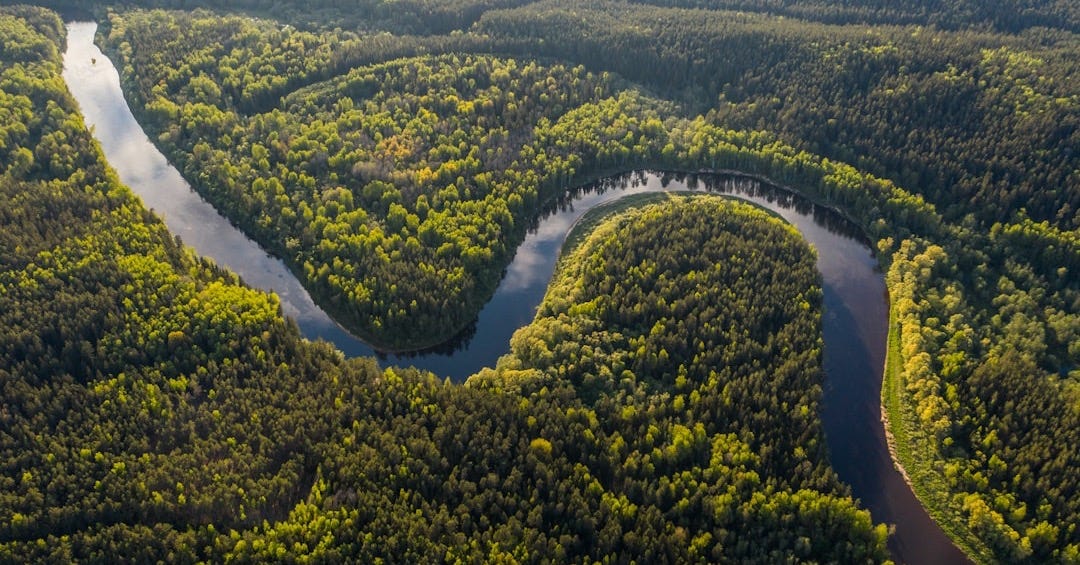
What makes this interview particularly cool is that one of the interviewers is Waja Xipai, an indigenous journalist from the Amazon, with the interview published in Spanish, English and Portuguese. In the interview, the Secretary General notes how indigenous voices are indispensable in the battle to avoid climate catastrophe. So if you’d like to practice your vocabulary about “el medio ambiente”, “el calentamiento global” and the melting of “las capas de hielo”, it’s worth checking it out.
Curated Listening: La lucha por proteger a los mashco piro, BBC Mundo
Of all the Spanish I’ve been consuming this week - and my Spanish teacher certainly worked me hard in preparation for my C2 exam in a fortnight’s time - this short, ten-minute video was probably the highlight.
The mashco piro tribe are one of the last isolated tribes in the world - and the biggest that remains - so it was an absolute delight to go on a journey with BBC Mundo to learn more about them. As noted in the video, a report by Survival International has found that half of these tribes could disappear in the next ten years - threatened by the mining and oil drilling which destroys the forest which they need to survive.
The Peruvian government has policies in place which make it illegal to contact isolated tribes, to protect them from abuse, tourism and diseases from the outside world. But what I loved most about the video was hearing from those living close to the mashco piro - talking about the importance of looking after their neighbours, learning their language, sharing their food, and the small moments of joy and laughter in their interactions. I can’t recommend it highly enough.
Curated Culture: El Desorden Que Dejas
In this week’s culture section, we’re exploring a Spanish Netflix show. No, not Money Heist - or La Casa de Papel for you true aficionados out there. And not even Élite - although if you decide to check that one out, you’ll certainly pick up some Gen Z, Spanish slang that you won’t find in any textbook.
Instead, our curated culture pick this week is El Desorden Que Dejas - titled in English as The Mess You Leave Behind. The mini-series centres on Raquel Valero, a literature teacher who arrives at a school to replace a colleague who has died under suspicious circumstances, and quickly finds herself entangled in a web of threats and mysteries. Alongside her, Arón Piper (of Élite fame) stars as Iago Nogueira, a troubled student with a dark secret.
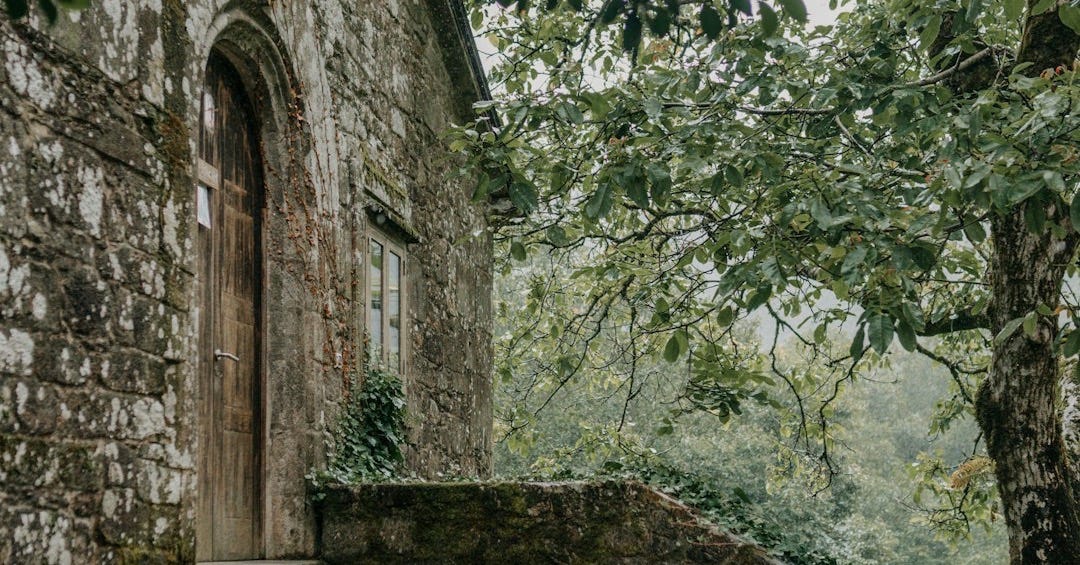
While a pretty average series in itself, I love it for its Galician setting - capturing all the rain, greenery and grey-stone buildings that define this part of Spain. The Spanish itself is pretty advanced for non-native speakers, and there’s even a little Galician thrown in to keep you on your toes.
But if you’re looking for a new Spanish series and you’re keen to explore a side of Spain that’s not Madrid, Barcelona or the whitewashed villages of Andalucía, El Desorden Que Dejas might just be your next binge-watch.
If you do decide to give it a go - do come back and let us know what you think!
Curated Community: Casey Kelly

Our next subscriber to share their Spanish learning journey with our community is Casey Kelly.
Casey is a Texan who has relocated to Portugal, while her grown-up children have moved from Texas to the Netherlands and Sweden. Her substack, We’re Moving to Europe, shares her experiences to help other Americans who are charting their path to a new life in Europe.
Here, she shares her Spanish-learning journey - from her childhood in San Antonio, formal Spanish teaching at school, to studying the language as part of her linguistics degree. These days, she uses El Boletín to help maintain her Spanish while learning European Portuguese.
Over to you, Casey!
When and why did you start learning Spanish?
I started picking up Spanish as a child from neighbors, classmates, family members, and TV. I grew up in San Antonio, Texas, where a lot of people are bilingual. My grandmother lived in the Rio Grande Valley on the Mexican border for a while before I was born, and she taught me a few phrases and would sometimes switch into Spanish to see if I could remember what she’d taught me. I wanted to learn because I wanted to understand what people were saying or singing in person and on TV.
Formal Spanish-language instruction started in 6th grade and it was optional, but I stuck with it through high school and I was fluent when I graduated. Leaving San Antonio for college in Austin eroded my fluency because I had fewer opportunities to speak Spanish throughout the day, even though I ended up with a concentration in Spanish language and a minor concentration in linguistics for my B.A. But I’ve found that after a couple of days in a Spanish-speaking country, it mostly comes back to me.
What advice would you give to other Spanish students?
Go all in! Immersion is how kids learn and even when we’re older, immersion helps speed up the language learning process. If you don’t have Spanish-speaking friends, colleagues, or neighbors, get on YouTube or a streaming service to find Spanish videos about topics you like. Watch them with Spanish subtitles to reinforce and decode what you’re hearing. Read Spanish news, literature, and social media posts. Read El Boletín!
Be consistent. Even 15 minutes a day of language learning and practice will build your skills over time.
What’s your proudest or most memorable moment you’d had using the language?
This is going to sound weird and so minor but it means so much to me when I can make a joke in the moment and it lands. Being able to make people laugh is the best, and it’s easy to take for granted in our native language.
What have you found most difficult, and how do you deal with that?
I’ve been studying European Portuguese for three years and speaking it daily for two years now that I live in Portugal. Although knowing Spanish makes it easier for me to read Portuguese, Portuguese grammar, vowel sounds, and pronunciation rules are more complex so it’s challenging. Still, the languages are similar enough that for about 18 months I was constantly dropping Spanish words into my Portuguese conversations without realizing it. Then while speaking Spanish on vacation last year I realized I was pronouncing it like Portuguese.
It hit me that I might lose my Spanish altogether if I didn’t get intentional about practicing it. So I started watching and reading Spanish media every day, alongside my Portuguese practice. Surprisingly, that also seems to be making it easier for me to keep the languages separate in my mind – at least a little.
What do you hope to achieve by subscribing to El Boletín?
Because I’m trying to hang onto my Spanish, I was really excited about El Boletín’s focus on advanced learners. I feel like there are plenty of beginner resources out there and then full-on Spanish media for people who are fluent, but less in the middle for those of us who aren’t novices but aren’t native speakers. So it’s the perfect newsletter for my Spanish language goals. Thank you for creating it and sharing it with the world!
That’s all for this week, Spanish learners! If you enjoyed the journey to the Amazon, Peru or Galicia this week - or you’ve got another Netflix recommendation that you’re dying to share with our community - why not let us know in the comments below? I’m always looking for new ideas to feature in future editions of El Boletín. And if you’d like to follow Casey and answer five questions on your Spanish learning journey, do reach out too.
Finally, if you’d like to support the newsletter, I’d be really grateful if you could take a few moments to complete the ten questions in our reader survey. Knowing more about who is reading, and your preferences, helps me to provide more of what you love, and less of what you don’t.
In the meantime, thanks for reading, and have a great weekend.
⁃ Gareth
Just found out about you guys from reading about you in Casey’s Substack (thanks, Casey!)
We’re living in Asturias, and I’m fully committed to becoming bilingual. ¡Gracias por hacer este trabajo!
Thanks for this week's newsletter! I'm adding that series to my queue, and I enjoyed the COP30 interview with Guterres