

Good morning everyone, and welcome to edition #6 of El Boletín - your weekly newsletter of curated reading, listening and cultural snippets for Spanish learners (and lovers of the Spanish-speaking world). A particularly warm welcome if you’re a new subscriber - you join a small, friendly group who are always happy to help with any questions you may have on your Spanish learning journey.
In our reading section this week, we’re delighted to welcome Luis Orlando Leon Carpio, a Cuban journalist and author of Cartas desde Europa, to share his experiences with imposter syndrome and his tips on how to overcome it (in Spanish). Meanwhile, in our listening section, we enjoy the song ‘Estrellas’ from the Spanish-language version of the musical Les Miserables. For both, our free glossaries are here to help.
In our culture section this week, Rebecca Weston talks us through the delights of the Camino de Santiago: a network of trails which snake across Europe, ending in Santiago de Compostela in Galicia, Northern Spain. And finally, in our community section, Jen Cook is the next member of our community to share her reflections on her Spanish-learning journey. If you’d like to contribute to a future edition of El Boletín by answering five short questions on your experiences learning Spanish, do let me know.
But for now, sit back, grab your Saturday morning coffee, and let’s get stuck into it.
- Gareth
Curated Reading: ¿Alguna vez sentiste que no mereces tus logros?, Luis Orlando León Carpio

Imposter syndrome - that feeling that your successes are down to luck rather than your ability, and the fear that you’ll be ‘found out’ at any point - can effect all of us at some point throughout our lives. While particularly common in a workplace environment, it can be particularly acute for those moving overseas - particularly if you’re having a tackle a new language at the same time.
In our reading section this week, we practice our comprensión lectora de español by welcoming Luis to share his experiences with imposter syndrome, and his advice on how to recognise it. You also won’t believe the famous names who’ve felt the same.
It’s a longer, more challenging text for advanced Spanish learners with some colloquial language - but our free glossary of key terms is here to guide you through.

Curated Listening: Estrellas, Los Miserables
We explored in a previous edition of El Boletín how music can be a great way to boost your listening comprehension in Spanish - the pace and rhythm of songs helping you to memorise new vocabulary. Moreover, using the Spanish version of songs you already know in English can provide another source of support, as it gives you context before you even start listening.
In our listening section this week, we explore ‘Estrellas’ the Spanish version of the song Stars from the musical Les Miserables. In the piece, Inspector Javert reflects on his pursuit of escaped convict, Jean Valjean, convinced of the moral and religious justice of his pursuit. As Spanish learners, it provides some lovely, poetic vocabulary including las sombras (the shadows), the irregular verb huir (to escape or flee), and a description of the stars as an inmenso mar de luz (an immense sea of light).
As always, our glossary of key terms is below.
Curated Culture: El Camino de Santiago - Rebecca Weston
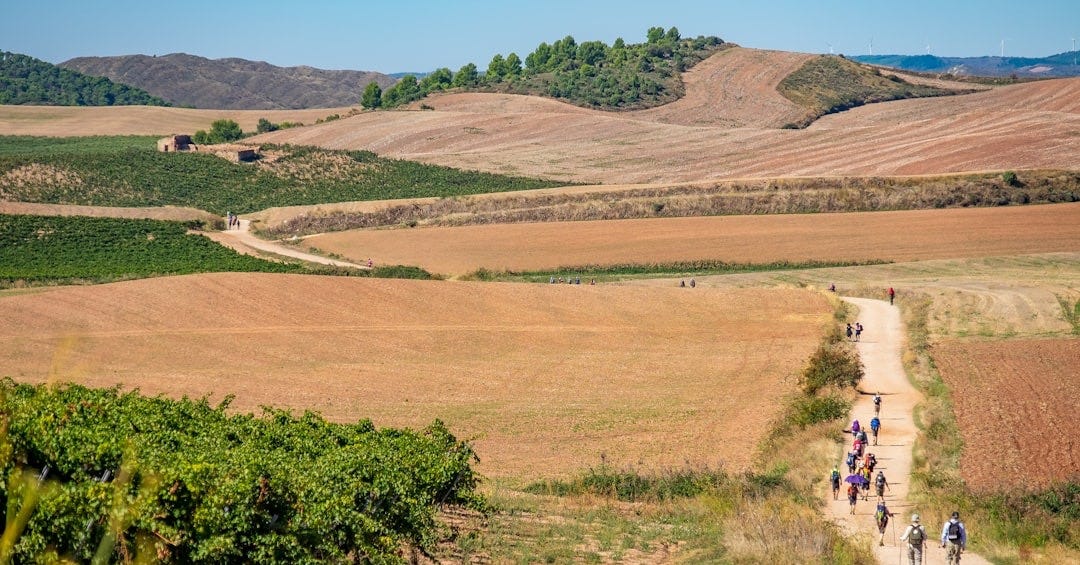
Picture Spain and you might just think of the whitewashed villages in the hills of Andalucía, the scorching heat of Sevilla, the cultural sights of Madrid or the Camp Nou in Barcelona. But Northern Spain, extending from the French border, through the Basque Country and across to the Atlantic Coast, is a greener, lesser-known part of the country that’s absolutely worth a visit.
And what better way to explore this part of this country than the Camino de Santiago - or in English, the Way of Saint James. A network of pilgrimage routes which connect across Europe and end in the Galician city of Santiago, you don’t have to be religious to enjoy the incredible scenery, the conversations with those you meet along the way, and the sense of achievement you’ll experience when you finally arrive.
But don’t take our word for it - we’re delighted to welcome Rebecca Weston, author of The Camino Calls, to explain why we should all get our walking boots on. Over to you, Rebecca!
Why did nearly 500,000 people walk into Santiago de Compostela, Spain this year? And why might it be just the experience you’re looking for?
The Camino de Santiago is a network of 1200+ year old trails across Europe ending the northwest corner of Spain. Back in the middle ages, people would leave their homes and walk for months to arrive at the supposed location of the remains of the apostle St. James: Santiago de Compostela, Spain.
Today, pilgrims from over 160 countries --of all faith backgrounds or none--arrive by foot, by bike or by wheelchair to embark on this incredible journey.
Imagine uninterrupted hours to engage in meaningful conversations with people of all different ages from around the world--or to walk in silence, listening only to the sounds in your heart.
Imagine carrying just what you need on your back--or carrying nothing at all while your bag is delivered to your next accommodation.
Imagine sleeping in villages that have welcomed Camino pilgrims for over 1200 years, speaking Spanish with locals whose families have welcomed pilgrims for generations.
Imagine a trip that challenged you in the best of ways -- physically, emotionally, spiritually.
Imagine waking up each morning knowing you just have one thing to do: walk.
Imagine a trip that leaves you believing in the good of humanity, that leaves you in awe of the generosity of strangers, that leaves you with a filled heart.
It exists.
It calls people.
If you’re in search of a vacation that leaves you with something more than just photos, I invite you to consider the Camino de Santiago.
If you’d like to explore more, I write about it on Substack every Sunday and have a live interview with different Camino-related guests every Wednesday. I can’t wait to meet you!
Curated Community: Jen Cook

Our community section - where a different member of our community each week reflects on their Spanish-learning journey - is quickly becoming one of our most popular sections. There’s something reassuring in knowing that, whatever their level (and in fact, whatever the language), all learners go through the same frustrations, challenges and joys when it comes to attempting to master a second tongue.
This week, we’re delighted to welcome Jen Cook, an American now living in Spain, to share her experiences with learning Spanish. As always, if you’d like to share your own experiences in a future edition of El Boletín, just let us know. It’s always the same five questions, and just a few short sentences for each answer.
But for now, here’s Jen with her thoughts!
When and why did you start learning Spanish?
I began learning Spanish in preparation for my family’s move to Spain in 2023. It started with Duolingo, but once I arrived in Spain, I found a local class to join, which propelled my learning journey quite a bit.
What advice would you give to other Spanish students?
Apps are great. Duolingo is a useful tool for building your vocabulary, but interaction with Spanish speakers and other Spanish learners will take you much farther than any app can. I’m an introvert, so this was hard for me to accept! But it truly works and has been the best method of learning. The Spanish people have been incredibly kind and supportive when I try to speak the language, and their encouragement helps me become braver about speaking Spanish even when I make mistakes.
What’s your proudest or most memorable moment you’ve had using the language?
My most memorable moment was when I went to Mercadona for groceries and discovered the cashier’s boyfriend was in my Spanish class! I was practicing my Spanish, explaining that I was learning and taking classes, and the more details I provided, the more she began to realize that her boyfriend was probably in my class. Interestingly, he’s from South Korea, speaks English, and is picking up the Spanish language incredibly fast. I think having a Spanish girlfriend probably helps. 😁
What have you found most difficult, and how do you deal with that?
Grammar and speaking are my biggest challenges. I pick up vocabulary pretty easily, but the sentence structure is so different from English that I find it challenging to remember how to arrange the words in a sentence. I understand quite a lot when someone speaks to me in Spanish, but when I try to speak, I sound like a toddler. It comes with the territory, though, and you can’t be embarrassed to try.
What do you hope to achieve by subscribing to El Boletín?
I’m hoping to learn some tips and tricks for furthering my language journey from El Boletín. I love hearing what works for others because it might be something I could try that I haven’t thought of yet!
That’s all for this week, Spanish learners! Have you experienced imposter syndrome as Luis describes, or did you learn any new vocabulary from Inspector Javert? Have you been inspired by Rebecca to do the Camino, or perhaps you nodded in agreement with Jen’s experiences learning Spanish? You can share your comments with the rest of the community below.
And if you’d like more structure to your Spanish practice, we’ve also introduced a daily thread in our subscriber chat from Monday to Friday. So you don’t just read the newsletter every Saturday, but you can do a little Spanish practice each day alongside other learners.
For now, que tengáis una buena semana!
⁃ Gareth
1) Hasta que no le pusieron un nombre, "Síndrome del impostor", muchos no entendían qué era exactamente lo que sentían delante de una situación, generalmente profesional. Muy interesante la experiencia de Luis.
2) En el 2000 si no me engaño, estaba estudiando en el conservatorio de Buenos Aires cuando un profesor comentó que estaban por estrenar el musical de Los Miserables. Nunca me gustaron los musicales pero cualquier cosa de revolución, ahí estaba yo, jajaja. Tres veces fui a verla la obra, maravillosa. En francés y en inglés Jean Valjean es es el prisionero 24601 (en el musical en inglés dice: who am I? two four six oh one) pero en español no quedaba bien y dice: "¿Quién soy yo? Dos cuatro seis cero dos". Acá la parte donde canta Juan Rodó, uno de los mejores cantantes argentinos: https://youtu.be/weDLnfTzcgk?si=Hmrf4YmLmFHwNbs1&t=2018
3) Esta frase: "but when I try to speak, I sound like a toddler. It comes with the territory, though, and you can’t be embarrassed to try". Todos estamos y estuvimos ahí. Esta semana mi sobrino se quedó en casa por una semana. Sin hablar una palabra del otro idioma de los primos o de mi compañero, se la pasó tratando de hablar (todos hablan español perfectamente pero el quería aprender). Quince años tiene y sin un gramo de la vergüenza que sentimos la mayoría de los adultos, se habló todo, jajaja. Hay que perder esa vergüenza. Porque la verdad, a nadie le importa si hablás con acento, bien, malo más o menos. Las ganas de comunicarse ganan.
¡Un abrazo!
Great newsletter this week! Just subscribed to Luis and Rebecca's newsletters, and so happy to see Jen featured here!
Impostor syndrome stalks me. But I live along the Portuguese route of the Caminho de Santiago, so maybe I can rethink the impostor issues on a long, reflective walk.
Muchas gracias, Gareth