

Good morning everyone, and welcome to edition #7 of El Boletín - your weekly newsletter of curated reading, listening and cultural snippets for Spanish learners (and lovers of the Spanish-speaking world).
In our curated reading section this week, we’re delighted to welcome Elena Gonzalez de Sande, who takes us on a walk to the Reina Sofia Museum in Madrid, where she visits an exhibition of Spanish artist Maruja Mallo. Meanwhile, our curated listening pick this week comes from Spanish pop-rock singer Melendi - who reflects on self-doubt, the past, and the importance of living for now, alongside his live audience.
But this week’s edition isn’t all from Spain! In our culture section, we touch on the city of Santiago, Chile, and a particularly famous Pisco sour cocktail that you can sample on top of the highest building in the Americas. And finally, in our community section, Rosemary DeSena is the next member of our community to share her Spanish-learning journey.
So get yourself comfortable, grab your Saturday morning coffee, and let’s get stuck into it.
- Gareth
Curated Reading: Maruja Mallo: un reloj de su tiempo, Elena Gonzalez de Sande
We’re going very cultured in our reading section this week, as Elena Gonzalez de Sande takes us inside the Reina Sofia Museum in Madrid.
Name after Queen Sofia, the museum was established in 1992, and is Spain’s premier modern and contemporary art museum, renowned for its vast collection of 20th-century masterpieces. The museum’s main attraction is undoubtedly Pablo Picasso’s Guernica, a piece which captures the horrors of war and remains one of the most iconic works of modern art.
In her piece, Elena visits the museum to see the temporary exhibit of Spanish artist Maruja Mallo. As the museum explains:
Maruja Mallo fue una de las grandes artistas del siglo XX español y una de las principales figuras de la generación del 27, de la que formaron parte Rafael Alberti, Salvador Dalí, Federico García Lorca, María Zambrano, Luis Buñuel y Rosa Chacel, entre otros. Es, además, la más importante representante del grupo de artistas que, por primera vez, presentaron colectivamente una cosmovisión [worldview] femenina desde una perspectiva también inédita, la de la mujer moderna, activa, libre y profesional.
Although very advanced for Spanish learners, Elena’s piece takes us on a journey, from the walk to the museum itself, and her reflections on the works of art she comes across throughout the exhibition. And as she concludes, “A mí, Maruja Mallo me puso el corazón a saltar”.
Curated Listening: Cenizas en la eternidad, Melendi
We’ve featured a few Spanish-language songs in the listening section of El Boletín so far, as a great way to learn new vocabulary - while using the rhythm of the music to help that vocabulary stick. And this week, we’re featuring Spanish pop-rock singer Melendi.
Melendi, whose full name is Rafael Melendi Espina, is one of Spain’s most popular contemporary singers, known for his distinctive voice and fusion of various musical genres. Born in Oviedo in 1979, he first rose to prominence in the early 2000s with his unique blend of pop, flamenco, rock, and Latin rhythms. His breakthrough album, “Sin Noticias de Holanda” (2003), introduced his signature style, marked by a raw and emotional approach to songwriting, as well as his ability to weave together poetic lyrics with catchy melodies.
The particular song we’re featuring in our listening section this week is Cenizas en la eternidad - Ashes in Eternity. In the song, Melendi reflects on his self-doubt when he looks in the mirror, his fear of the past, and the importance of living life for now - because in the end, what we are today will in the future simply be recorded in the ashes of history. The energy he shares with the live crowd in the performance above is nothing short of euphoric.
Curated Culture: Santiago and the Pisco Sour
Rebecca Weston’s contribution last week about the Camino de Santiago, ending in the city of Santiago in Galicia, got me thinking of my trip last year to its namesake of Santiago, Chile. The city is fantastic: rich in culture and history, with some world-class museums - particularly the Museum of Pre-Columbian Art, which showcases a stunning collection of artifacts from indigenous peoples across the Americas. You can also take a cable car up to the top of one of the hills overlooking the city, to see the sprawling metropolis below, with stunning views of the Andes in the background.
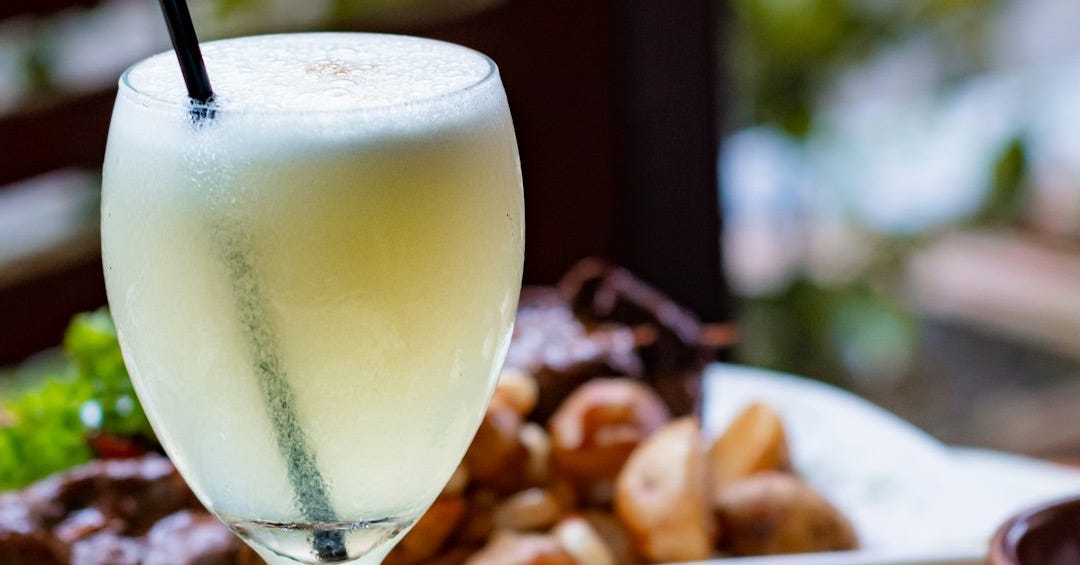
But don’t miss the opportunity to visit the Sky Costenera - the tallest building in South America with a height of 300 metres. At the top, you’ll get an amazing panoramic view of Santiago, especially at sunset. And if you’re in the mood for a drink, I highly recommend trying a Pisco cocktail while you’re up there.
A classic Pisco Sour, for example, is made with Pisco (a South American brandy), fresh lime juice, simple syrup, egg white, and a few dashes of bitters. The result is a deliciously tangy and frothy drink that strikes a balance between sour and sweet, with the distinct warmth of Pisco that lingers at the end. The taste is smooth and refreshing with a slight kick, making it perfect for enjoying while soaking in those incredible city views.
The cocktail’s origins, however, are the subject of much debate. While Chile and Peru both claim to have invented it, the exact birthplace remains unclear, and each country has its own variations. It’s definitely worth trying both versions if you find yourself in either country. And if you’d like to try making one yourself, there are recipes for both the Peruvian and Chilean versions here.
Curated Community: Rosemary DeSena
Our next subscriber to share their Spanish learning journey with our community is Rosemary DeSena.
Rosemary is a poet and essayist living in San Francisco, California whose sister newsletters Life is a Poem (in English) and La Vida es un Poema (in Spanish) explore ways to cultivate joy in the everyday, and how to connect to community while doing it. Rosemary also co-hosts a multilingual haiku club (Quedada Haiku) with our previous contributor Charlie Marrez - in which readers in Spanish and English participate by sharing their haikus which are published in Charlie and Rosemary’s newsletters. They are preparing a call for reader participation in Quedada Haiku 3 soon.
Finally, Rosemary is working on creating a Poetry Play Place as a workshop activity to accompany her newsletters, where English and Spanish native speakers and learners can join together in exploring the creative principles that make up a poem: imagery, memory, rhythm and word play. The hope is that a safe Spanglish space can be created where intermediate+ speakers in either language can participate together.
Over to you, Rosemary!
When and why did you start learning Spanish?
As long as I can remember, I wanted to be bilingual. As young as 6 or 7, I was asking my parents to get me Spanish or Italian lessons: Italian, because of my heritage, and also because a playmate in my neighborhood was from Florence, Italy, and had recently emigrated from there. Spanish, partly because the neighborhood in Queens, NY where my grandparents lived had changed from mostly Italian to Hispanic by the 1980s, and I wanted to connect with the bilingual children I played with by speaking their language.
In middle school, when learning a foreign language was required, I started formally learning Spanish and continued taking classes until my freshman year in college.
As an adult, I started revisiting my dreams of becoming bilingual again. When the pandemic hit in 2020, I used to take daily walks, and native speakers would start talking to me - hoping that I was another native speaker to connect to in a time of isolation. I knew enough to understand what they were saying, but not enough to speak it back. So I started up my studies again.
Now I’m also writing in Spanish here in Substack, despite not being fluent, and growing a unique readership of subscribers in Spanish and English. Interacting with Spanish-speaking Substackers has exponentially improved my Spanish ability.
What advice would you give to other Spanish students?
I’m a perfectionist and I had to learn to be okay making mistakes so I could improve. So my advice would be to get used to the uncomfortableness of messing up and do it - mess it up! What reminds me it’s ok to ditch this self-consciousness is the support of the native Spanish speakers I meet every day, who don’t seem to mind my mistakes, and whom I wouldn’t have gotten to know if I hadn’t put myself out there.
What’s your proudest or most memorable moment you’d had using the language?
I don’t have a particular moment, but I think the moments that mean the most to me are the ones when I have connected with a native Spanish speaker here in the United States who is not yet fluent in English. Since I get mistaken for being a native Spanish speaker a lot, when someone makes this assumption, I feel good when I can help someone get where they need to go, or be there when they want a moment of human connection with someone who can understand them.
What have you found most difficult learning Spanish, and how do you deal with that?
Living in the United States, I’m surrounded by dozens of types of Spanish in my neighbourhood alone. So now that I’m getting more fluent, it’s hard to know how to integrate more colloquial speech into my expression of it. Whose Spanish am I using? Whose grammar should I use? Which idioms should I use? I have no idea if I’m making sense to anybody when I’m grabbing at language to use.
I haven’t found a fix for this yet. I’m open to suggestions!
What do you hope to achieve by subscribing to El Boletín?
I’m always looking for ways to increase my Spanish fluency and to expand my knowledge of the Spanish language and the cultures of the people who speak it, and I like that El Boletín is curating articles to read, videos to watch, audios to listen to, while offering vocabulary lists and links to the places where we can explore topics more. I think it will be a great resource for Spanish learners. I also like the idea of connecting to a community of language learners like me working to meet that next level of fluency.
That’s all for this week, Spanish learners! Have you visited the Reina Sofia Museum in Madrid, or tired a Pisco sour? Are you a fan of Melendi, or would you recommend another musical number from the Spanish-speaking world? Let us know - either by replying to this email or leaving your comments below - and we might share it with the rest of the community in a future edition of El Boletín.
And if you’d like to support the newsletter, please do share it with just three friends who understand the joys of exploring the Spanish language and Spanish-speaking culture. Let’s keep supporting each other on the path to fluency, together.
For now, que tengáis una buena semana!
⁃ Gareth
1- Qué lindo leer esto: "Now I’m also writing in Spanish here in Substack, despite not being fluent, [...] Interacting with Spanish-speaking Substackers has exponentially improved my Spanish ability". Es lo que venimos charlando (por comentarios). Hay que largarse a hablar, a escribir. Hay que interactuar. Hay que perder la vergüenza. Nadie nace sabiendo y aprendemos de los otros y con otros.
2- Una vez, charlando con unos conocidos peruanos, casi somos muertos por miradas lacerantes cuando preguntamos sobre el pisco y su origen. Lo mismo pasó recientemente cuando en un intercambio de profesores, le pregunté a una profesora chilena con la cual tenemos una linda amistad de reuniones virtuales semanales sobre qué me recomendaba típicamente chileno. Entre esas cosas, recomendó el pisco. Pregunté sobre esa rivalidad con Perú. Descartó la rivalidad con mirada lacerante también; el pisco era chileno, jajajaja.
¡Gracias por acogerme en El Boletín! Me parece una iniciativa preciosa 💛